Best Streamer Microphones for Podcasting 2026: What Reviewers Agree On
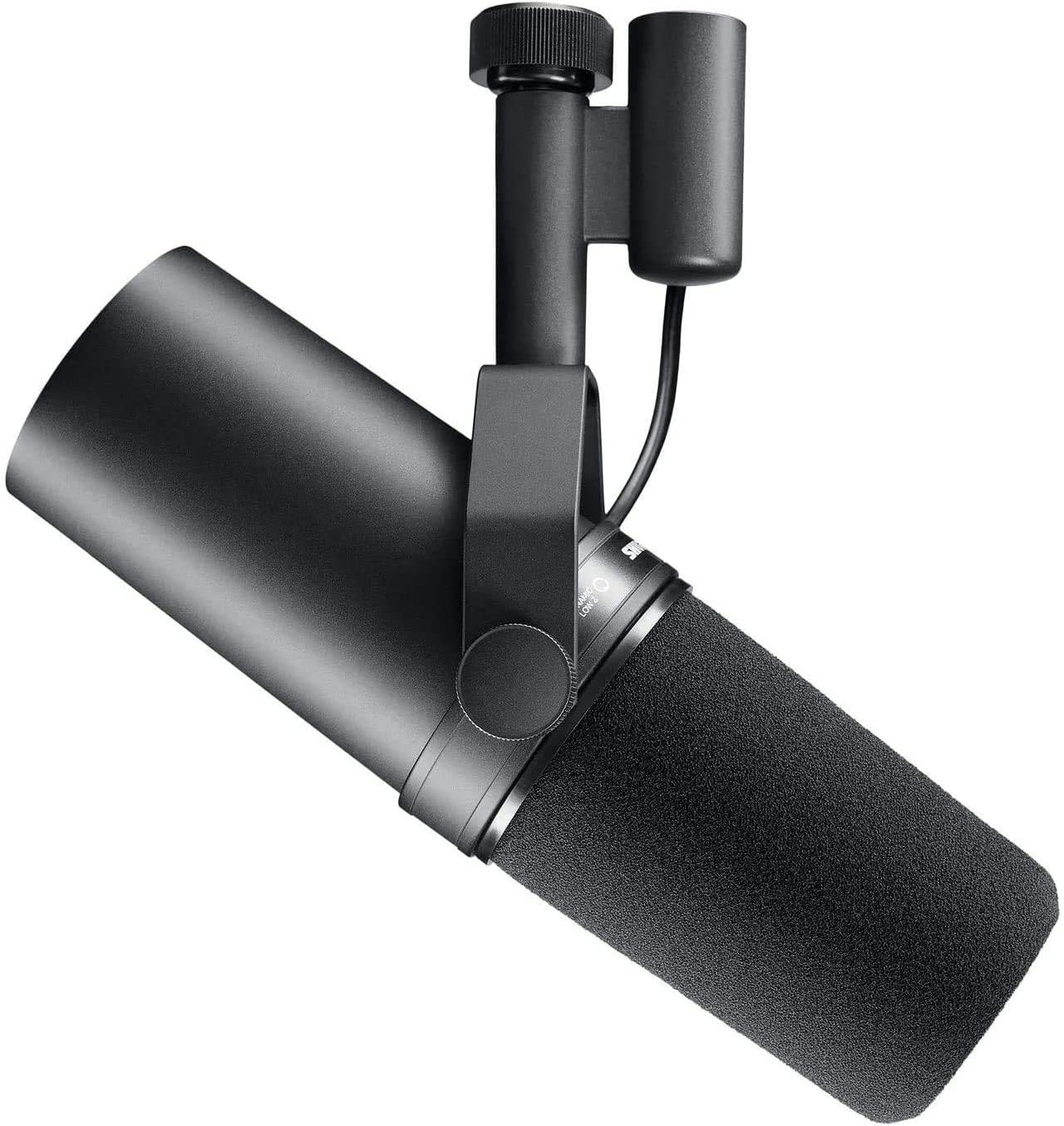
Shure SM7B
Podcasters record in rooms they do not control, and the SM7B is the mic reviewers trust to make that irrelevant: it rejected street noise, keyboards and air conditioning in every test where a condenser captured them. The presence boost switch suits close speech, and long-term reviewers describe the same unit still working after years of weekly episodes, which is why it stays the reference despite its gain demands.
📺 Show 6 review videos
Watch Video
Watch Video
Watch Video
Watch Video
Watch Video
Watch Video
📊 Quick Comparison
| # | Product | Recommended By | Best For | Price |
|---|---|---|---|---|
| 1 | Shure SM7B | 5/6 reviewers | untreated rooms and loud voices that need broadcast-style rejection | $399-459 |
| 2 | Electro-Voice RE20 | 4/6 reviewers | long-form shows where hosts move and levels must stay consistent | $449-499 |
| 3 | Shure MV7X | 4/6 reviewers | interface owners who want MV7 voicing without paying for USB | $199-229 |
| 4 | Rode PodMic | 3/6 reviewers | first XLR podcast rigs where budget goes to the interface instead | $99-129 |
| 5 | Samson Q2U | 2/6 reviewers | absolute-budget podcasting where the kit must include everything | $69-89 |
💬 Reviewer Consensus
Common Pros
- Shure SM7B: rejected room and street noise that condensers captured (5/6 mention)
- Electro-Voice RE20: variable-D design kept proximity effect even when the host moved (4/6 mention)
- Shure MV7X: broadcast voicing at half the SM7B price (3/6 mention)
- Rode PodMic: internal shock mount removed table noise from two-host recordings (3/6 mention)
Common Cons
- Shure SM7B: 60 dB+ gain requirement forced an interface or inline booster (5/6 mention)
- Electro-Voice RE20: large body blocked sightlines in video podcasts (2/6 mention)
- Shure MV7X: XLR-only, no USB fallback for remote co-hosts (3/6 mention)
- Samson Q2U: headphone monitoring hiss was audible in quiet passages (2/6 mention)
⚠️ Real-World Pain Points (from hands-on reviews)
- Two-host podcasts expose the pattern problem: reviewers found that a single cardioid mic forces hosts to sit unnaturally close, and the alternative is a second mic plus an interface they had not planned for.
- Gain staging is the recurring tax on dynamic mics. Reviewers describe hearing preamp noise on quiet speakers and having to buy a booster to fix a problem the mic created.
- Editing time, not sound quality, is what podcasters complain about most: three reviewers said breath and plosive cleanup added more minutes per episode than the mic's better tone saved.
🔍 Detailed Breakdown
Shure SM7B
The SM7B is the reference broadcast dynamic: it ignores rooms, keyboards and untreated walls, and it has been on radio desks for decades. It needs a lot of clean gain, which is why most owners end up buying an interface or a booster alongside it.
Best for: untreated rooms and loud voices that need broadcast-style rejection - $399-459
Electro-Voice RE20
The RE20 is the radio-industry standard for a reason: its variable-D design keeps the low end consistent as a host moves, so nobody sounds boomy up close and thin when leaning back. It is big, heavy and needs clean gain.
Best for: long-form shows where hosts move and levels must stay consistent - $449-499
Shure MV7X
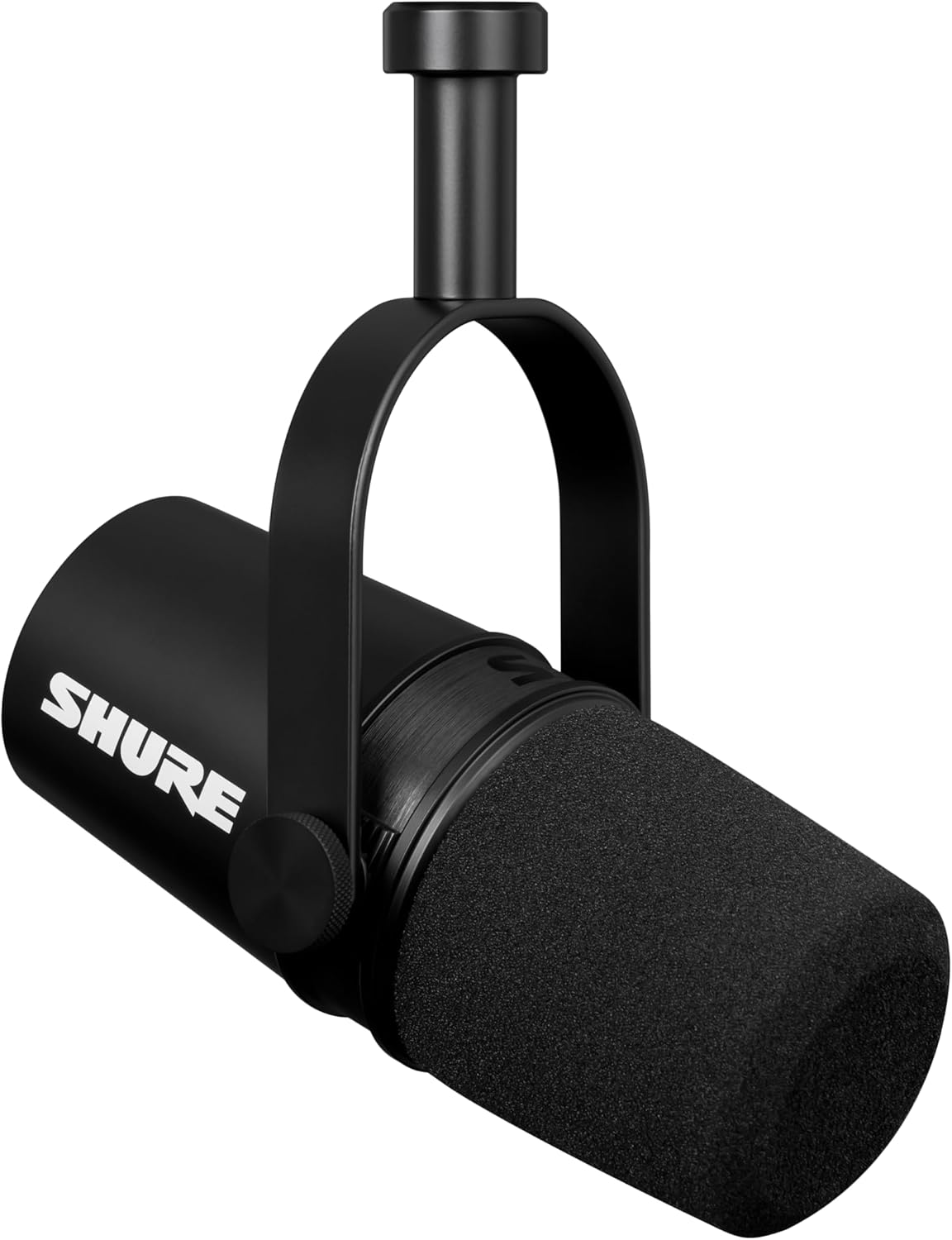
The MV7X is the MV7 without the USB electronics: same voice-forward capsule, XLR only, roughly half the price. It is the right buy for someone who already owns an interface and does not want to pay for a USB port they will never use.
Best for: interface owners who want MV7 voicing without paying for USB - $199-229
Rode PodMic
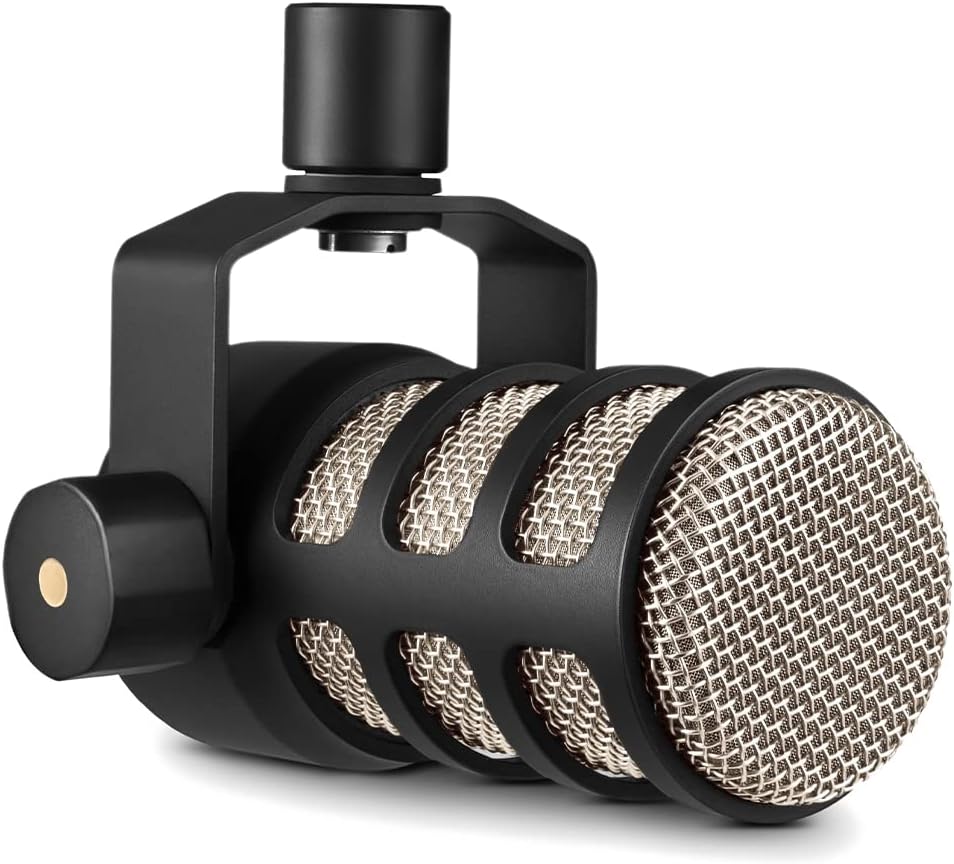
The PodMic is the default first XLR podcast mic: a tight dynamic capsule, an internal pop filter and a swing mount, for around $100. It rejects room noise well and sounds forward on speech, provided the interface can supply enough clean gain.
Best for: first XLR podcast rigs where budget goes to the interface instead - $99-129
Samson Q2U
The Q2U is the budget dual-output classic: USB and XLR, a headphone jack, and a kit that includes the cables people forget to buy. It is 16-bit and plastic-bodied, but it makes a usable podcast recording on day one.
Best for: absolute-budget podcasting where the kit must include everything - $69-89
Also considered
We compared 5 products. Shure SM7B won overall — the rest are strong in narrower niches:
- Electro-Voice RE20 — long-form shows where hosts move and levels must stay consistent (4/6 reviewers)
- Shure MV7X — interface owners who want MV7 voicing without paying for USB (4/6 reviewers)
- Rode PodMic — first XLR podcast rigs where budget goes to the interface instead (3/6 reviewers)
- Samson Q2U — absolute-budget podcasting where the kit must include everything (2/6 reviewers)
📖 Confused by the specs? Plain-English explanations
❓ Frequently Asked Questions
Why is the Shure SM7B our top pick?
Our Pick: Shure SM7B
Podcasters record in rooms they do not control, and the SM7B is the mic reviewers trust to make that irrelevant: it rejected street noise, keyboards and air conditioning in every test where a condenser captured them. The presence boost switch suits close speech, and long-term reviewers describe the same unit still working after years of weekly episodes, which is why it stays the reference despite its gain demands.
$399-459
Check Price on Amazon →